
Kitec and polybutylene pipes in Placer County homes

Quick Diagnostic Summary: Polybutylene (gray plastic, 1978–1995) and Kitec (orange and blue composite, 1995–2007) are defective plumbing materials with near 100% long-term failure rates found throughout South Placer County homes. Municipal disinfectants degrade polybutylene resin, while Kitec brass fittings corrode through dezincification. The only permanent, insurance-approved remedy is a complete whole-house Uponor PEX-A repipe.
Homeowners purchasing or living in residential properties across Roseville, Rocklin, Lincoln, Loomis, and Penryn frequently encounter these two legacy plumbing products during renovations or real estate transactions. When originally introduced, both products were marketed as flexible, labor-saving alternatives to traditional copper. Decades later, both piping systems represent ticking financial liabilities that trigger insurance non-renewals, mortgage escrow delays, and catastrophic residential flood events.
Understanding the specific physical appearance, chemical failure mechanisms, and local geographic prevalence of polybutylene and Kitec enables homeowners to take proactive remediating action before an unmonitored line rupture causes tens of thousands of dollars in structural drywall and flooring damage.
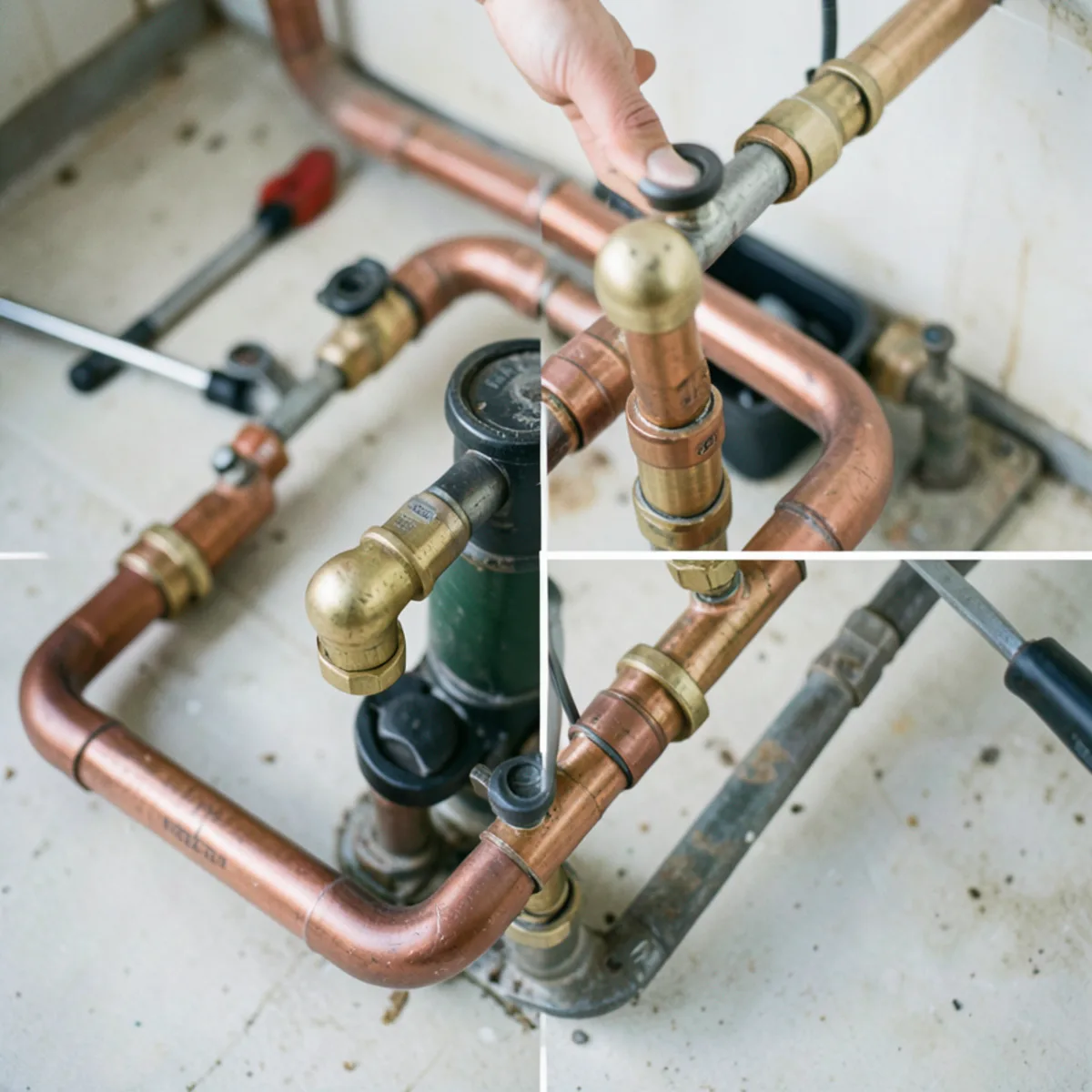
Quick Identification: Polybutylene vs Kitec Comparison
Identifying which plumbing pipe material is installed inside your home is straightforward once you know where to look and what markings to verify. Both materials are distinct from rigid copper, CPVC, and modern PEX.
Check beneath kitchen and bathroom vanity sinks, at the water heater connection in the garage, or near the main water shut-off valve. Here is how the two defective materials compare:
1. Material Name: Polybutylene (commonly called Quest pipe). Production Years: 1978 to 1995. Tubing Appearance: Matte gray, semi-flexible plastic tubing. Markings: Stamped with 'PB2110'. Common Fitting Types: Gray plastic acetal fittings with aluminum or copper crimp rings, or barbed brass fittings.
2. Material Name: Kitec (also sold under brand names KERR Controls, Plastex, or XPA). Production Years: 1995 to 2007. Tubing Appearance: Bright orange for hot-water lines and bright blue for cold-water lines (some gray or black exterior jackets exist). Markings: Stamped with 'Kitec', 'Kitec 80', 'KERR Controls', or 'ASTM F1281'. Common Fitting Types: High-zinc cast brass fittings stamped with 'Kitec' or 'KTC'.
3. Local Geographic Hotspots: Polybutylene is prevalent in 1980s and early 1990s subdivisions in East Roseville and Rocklin. Kitec is widely concentrated in custom foothill homes, ranches, and acreage developments constructed between 1995 and 2007 in Penryn, Loomis, Newcastle, and rural Rocklin.
Have questions about plumbing in your home?
Speak directly with a licensed Roseville plumber at (207) 419-2600.
The Chemistry of Polybutylene Degradation in Municipal Water
Polybutylene was installed in an estimated six to ten million homes across the United States before class-action litigation halted its manufacturing in the mid-1990s. In South Placer County, thousands of tract homes built during the population surge of the 1980s incorporated polybutylene supply lines.
The fundamental failure mechanism of polybutylene is chemical rather than mechanical. Municipal water utilities—including the City of Roseville Environmental Utilities and the Placer County Water Agency (PCWA)—use chlorine and chloramine chemical disinfectants to sanitize public drinking water mains. As chlorinated water flows through polybutylene pipes, the chlorine reacts directly with the polyolefin plastic polymer chains.
Over years of exposure, this oxidation reaction causes micro-fracturing along the inner pipe wall and inside plastic acetal insert fittings. Microscopic flakes of plastic shed into the water stream, thinning the pipe wall until pinhole leaks or sudden structural blowouts occur. Because the degradation occurs entirely on the inside of the pipe, a polybutylene tube can appear perfectly clean on the outside while resting seconds away from catastrophic failure.
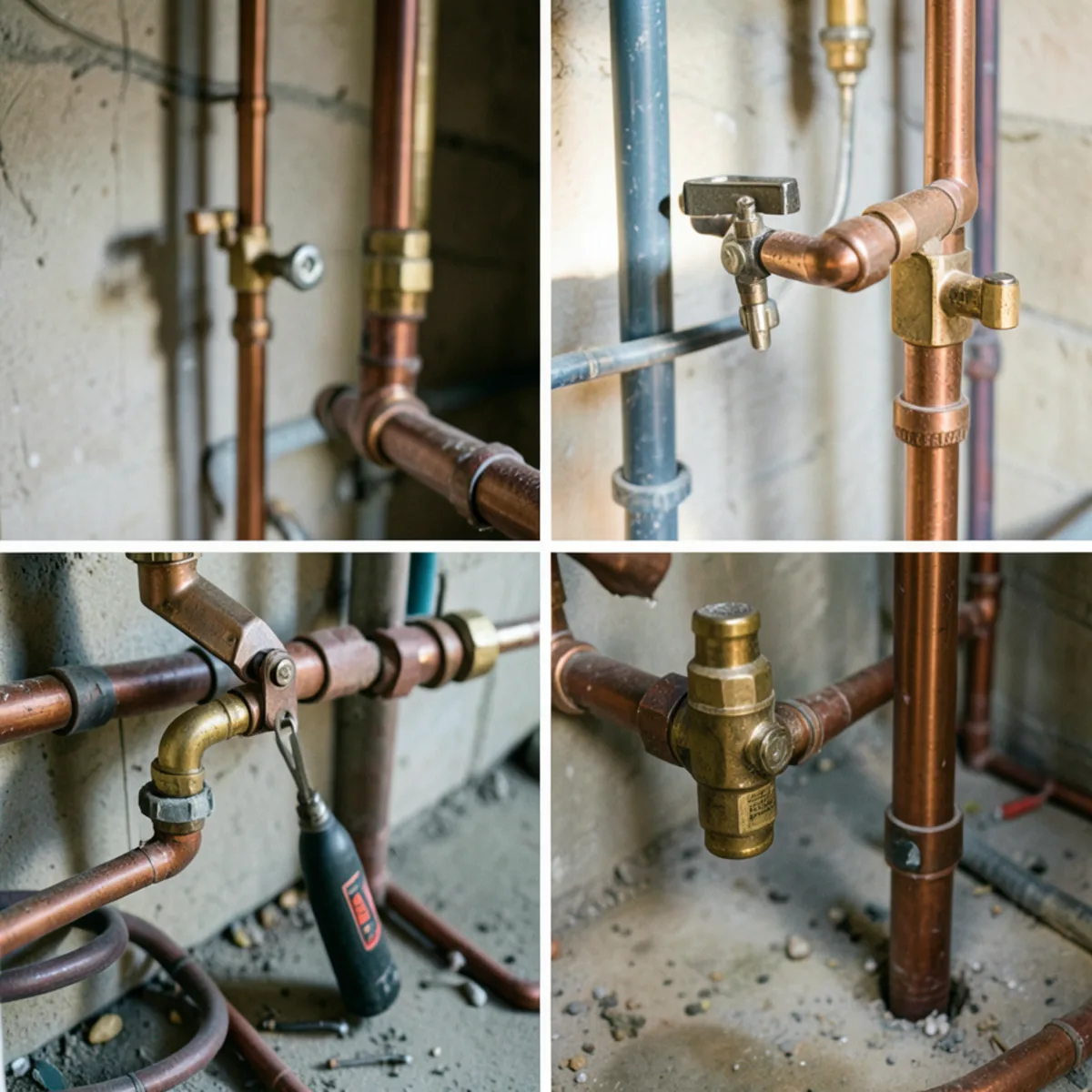
The Mechanism of Kitec Dezincification & Structural Burst Hazards
Kitec entered the residential building market in 1995 as an engineered aluminum-composite piping system. It featured a thin inner layer of cross-linked polyethylene (PEX), a middle core of welded aluminum to maintain shape and block oxygen permeation, and a protective outer PEX jacket. While the tubing itself was relatively resilient, the system's downfall lay in the metallurgy of its brass fittings.
The brass fittings manufactured for Kitec contained high concentrations of zinc (often exceeding 30% to 40% zinc content). In the presence of municipal and foothill well water chemistry containing dissolved oxygen and minerals, a galvanic corrosion process known as dezincification takes place.
During dezincification, the zinc selectively leaches out of the brass alloy into the water supply. This leaves behind a weak, porous, copper-rich metallic sponge coated in a telltale white or pale-green powdery zinc oxide efflorescence. As the corrosion builds, it constricts internal water flow—often choking a 1/2-inch fitting down to a tiny pinhole. Under ongoing water pressure surges and water hammer, the dezincified brass becomes brittle and fractures cleanly, releasing full municipal water pressure directly into wall and ceiling cavities.
California Insurance Underwriting & Real Estate Escrow Impact
Living with polybutylene or Kitec plumbing has escalated from a maintenance inconvenience into a severe financial liability under California insurance underwriting regulations. Due to billions of dollars paid out in historic water damage claims, major property insurers operating in California routinely inspect plumbing materials during policy renewals or home purchases.
Most admitted property insurance carriers will outright refuse to issue a new homeowners policy on a Placer County home that contains active Kitec or polybutylene plumbing. Other carriers insert explicit policy riders excluding water damage caused by plumbing failures, leaving homeowners entirely on the hook for tens of thousands of dollars in remediation bills.
In real estate transactions, Kitec and polybutylene represent major deal hurdles. California Association of Realtors (C.A.R.) property disclosure forms mandate that sellers disclose known defective plumbing materials. Home inspectors in Roseville, Rocklin, and Loomis actively search for orange and blue pipes or gray Quest tubing. When discovered during home inspection contingencies, prospective buyers routinely demand a full credit or require the seller to complete a licensed whole-house repipe prior to closing escrow.
The Solution: Whole-House Uponor PEX-A Repiping Protocol
Neither polybutylene nor Kitec plumbing can be reliably repaired through localized spot repairs. Because chemical degradation and dezincification occur uniformly across every fitting and pipe segment in the house, patching a single leak simply transfers hydraulic pressure to the next weakest fitting.
The only permanent, code-compliant, and insurance-approved solution is a complete whole-house repipe using Uponor PEX-A (cross-linked polyethylene) expansion piping. Operating from 1322 Blue Oaks Blvd, our plumbing technicians follow a meticulous repipe protocol designed to minimize household disruption:
1. Engineering & Permit Filing: We pull mechanical building permits through the City of Roseville Permit Center, City of Rocklin Building Division, or Placer County CDRA.
2. Non-Invasive Pipe Routing: Rather than tearing open continuous wall channels, we route flexible Uponor PEX-A through attic spaces, floor crawlspaces, and vertical utility chases, making only small, strategic incisions behind fixtures.
3. High-Quality Commercial Hardware: We install solid lead-free brass fittings, ProPEX expansion rings that never loosen, and commercial quarter-turn brass ball valve angle stops beneath every sink and toilet.
4. Pressure Testing & City Inspection: The completed system is pressurized to 100 PSI with compressed air and held under official witness inspection by municipal building officials.
5. Tidy Drywall Restoration: Professional patchers restore all wall incisions with clean drywall patching, taping, and texture matching to match existing wall finishes.
Emergency Stabilization Triage for Active Leaks
If you discover active weeping or spraying from a polybutylene or Kitec pipe in your home, immediate stabilization prevents major structural inundation:
1. Immediate Main Shut-Off: Rotate your home's main water shut-off valve (located on the front exterior wall or in the garage) clockwise until seated (gate valve) or a quarter-turn perpendicular to the pipe (ball valve).
2. Pressure Depressurization: Open the lowest exterior garden hose bib and lowest interior sink faucets to drain standing water pressure from the pipe network.
3. Water Heater Isolation: Shut off the cold-water inlet ball valve above your water heater and switch gas water heaters to 'Pilot' mode (or trip electric breakers) to protect heating elements.
4. Call Our Blue Oaks Dispatch: Contact our emergency plumbing team at (207) 419-2600. We dispatch fully stocked trucks across Roseville, Rocklin, Lincoln, Loomis, and Penryn to stabilize lines and outline comprehensive repiping options.
Related Plumbing Services & Coverage
Services Mentioned:
Relevant Communities:
Frequently asked questions
Need professional plumbing service in Roseville?
Our Blue Oaks Blvd technicians provide upfront written estimates on every visit.