
Slab leaks in newer Roseville and Rocklin homes
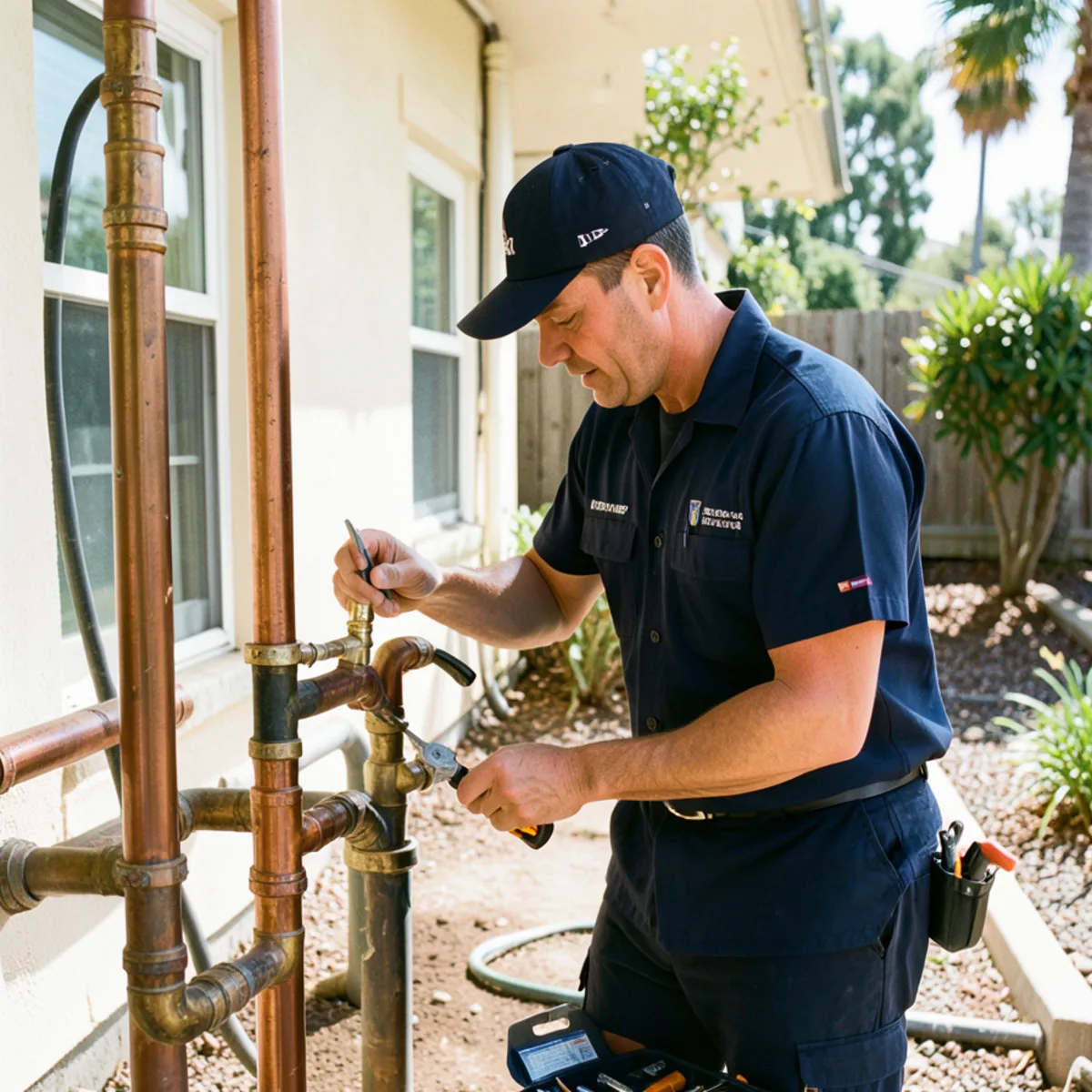
Quick Diagnostic Summary: A slab leak is a pressurized domestic water pipe rupture beneath a concrete foundation slab. In Roseville and Rocklin homes, the most common warning signs include isolated warm floor spots, continuous hissing behind baseboards, a spinning street water meter when all taps are off, and unexplained utility bill spikes. The most cost-effective permanent fix is an overhead PEX bypass reroute rather than jackhammering finished floors.
The vast majority of single-family homes constructed in South Placer County since the mid-1980s—including master-planned subdivisions in Stanford Ranch, Highland Reserve, Sun City Roseville, and WestPark—are built on concrete slab-on-grade foundations. While concrete foundation slabs offer excellent structural stability against seismic tremors, they entomb copper water lines beneath 4 to 6 inches of steel-reinforced concrete and packed gravel.
When a buried copper pipe develops a pinhole rupture from soil friction or water chemistry, high-pressure water escapes continuously beneath the foundation. Recognizing early symptoms and deploying non-invasive acoustic diagnostics allows homeowners to resolve the leak before escaping water erodes foundation support or causes catastrophic mold contamination.
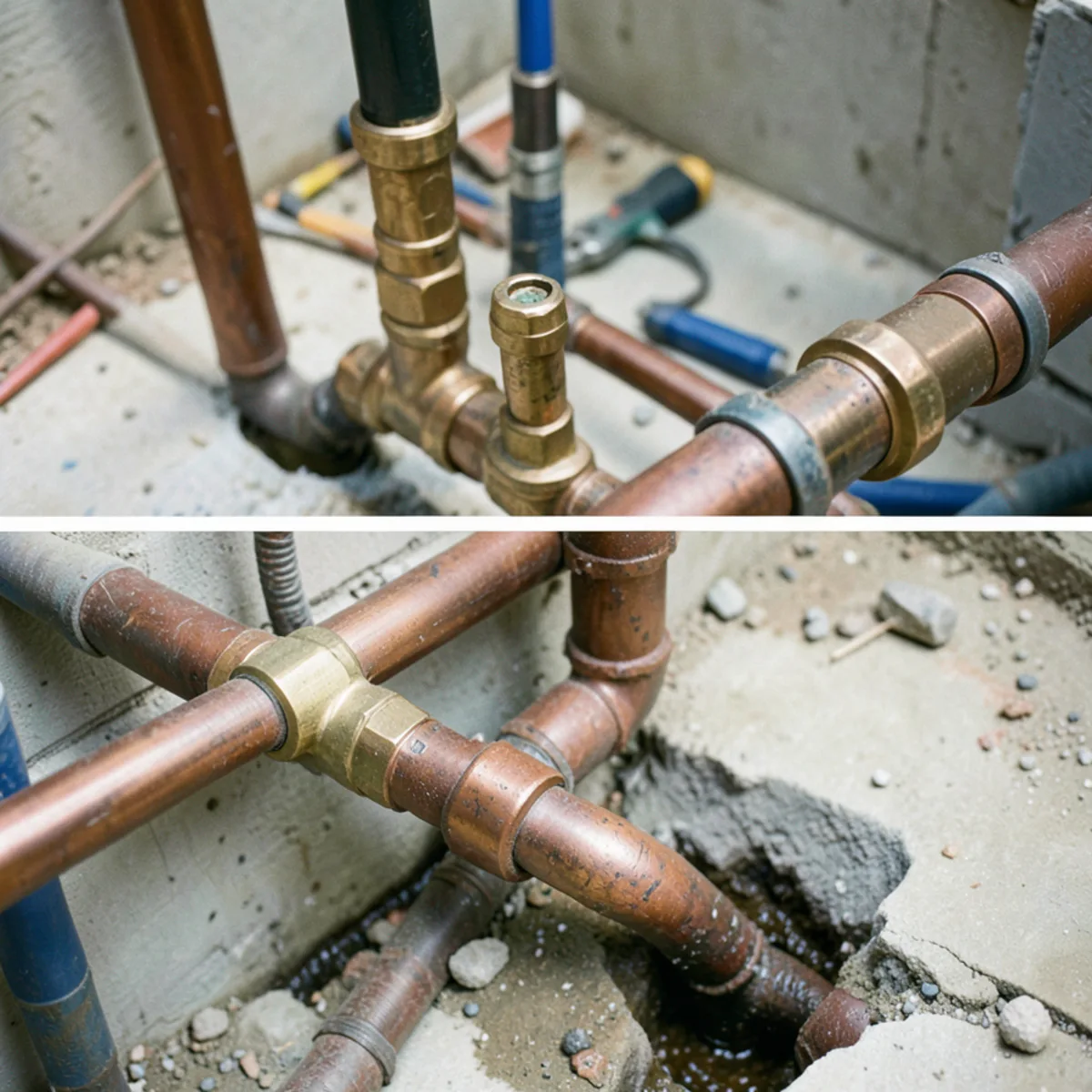
The Five Cardinal Symptoms of an Under-Slab Water Leak
Because water lines are concealed beneath concrete, slab leaks rarely present as geysers of surface water. Instead, homeowners must watch for subtle thermal, acoustic, and utility warning signs:
1. Isolated Warm Spots on Flooring: If you feel a distinctly warm patch walking barefoot across tile, vinyl, or carpet—particularly in hallways, near bathrooms, or in laundry rooms—hot water escaping from an under-slab domestic line is actively heating the concrete foundation slab from below.
2. The Sound of Running Water in Quiet Rooms: Hearing a faint, persistent whooshing, rushing, or hissing sound behind baseboards or beneath floorboards when every sink, shower, washing machine, and toilet in the home is completely shut off.
3. Unexplained Municipal Water Bill Spikes: A sudden, dramatic jump in your monthly City of Roseville Environmental Utilities or Placer County Water Agency (PCWA) water bill without any change in household irrigation or routine consumption.
4. Continuous Street Meter Spinning: The low-flow leak detection indicator dial or digital flow rate on your exterior street water meter continues moving even after isolating every indoor fixture.
5. Floor Buckling, Grout Discoloration & Baseboard Mildew: Moisture migrating upward through porous concrete micro-cracks dampens carpet padding, warps engineered hardwood flooring, loosens ceramic floor tiles, and causes white mineral efflorescence along baseboard edges.
Have questions about plumbing in your home?
Speak directly with a licensed Roseville plumber at (207) 419-2600.
How to Perform the 15-Minute Water Meter Leak Check
Before calling a plumbing technician, you can definitively verify whether your home has an active pressurized water leak by performing a simple 15-minute street water meter test:
Step 1: Shut off all water-consuming appliances inside and outside the home. Ensure the washing machine, dishwasher, reverse osmosis systems, and ice makers are not cycling. Turn off all automatic landscape irrigation controllers.
Step 2: Locate your municipal water meter box, typically positioned in a concrete vault in the sidewalk or front lawn near the street curb. Carefully remove the cast-iron lid using a screwdriver or meter key.
Step 3: Inspect the meter register face. On mechanical meters, look for the small red or silver triangular 'leak indicator' dial. On newer digital electronic meters, observe the digital flow rate read-out in gallons per minute (GPM).
Step 4: If the small triangular dial is slowly rotating, or if the digital display records continuous flow (even 0.1 to 0.5 GPM), pressurized water is escaping somewhere downstream of the meter. If no indoor fixtures or irrigation valves are running, you have an active supply line or under-slab leak.
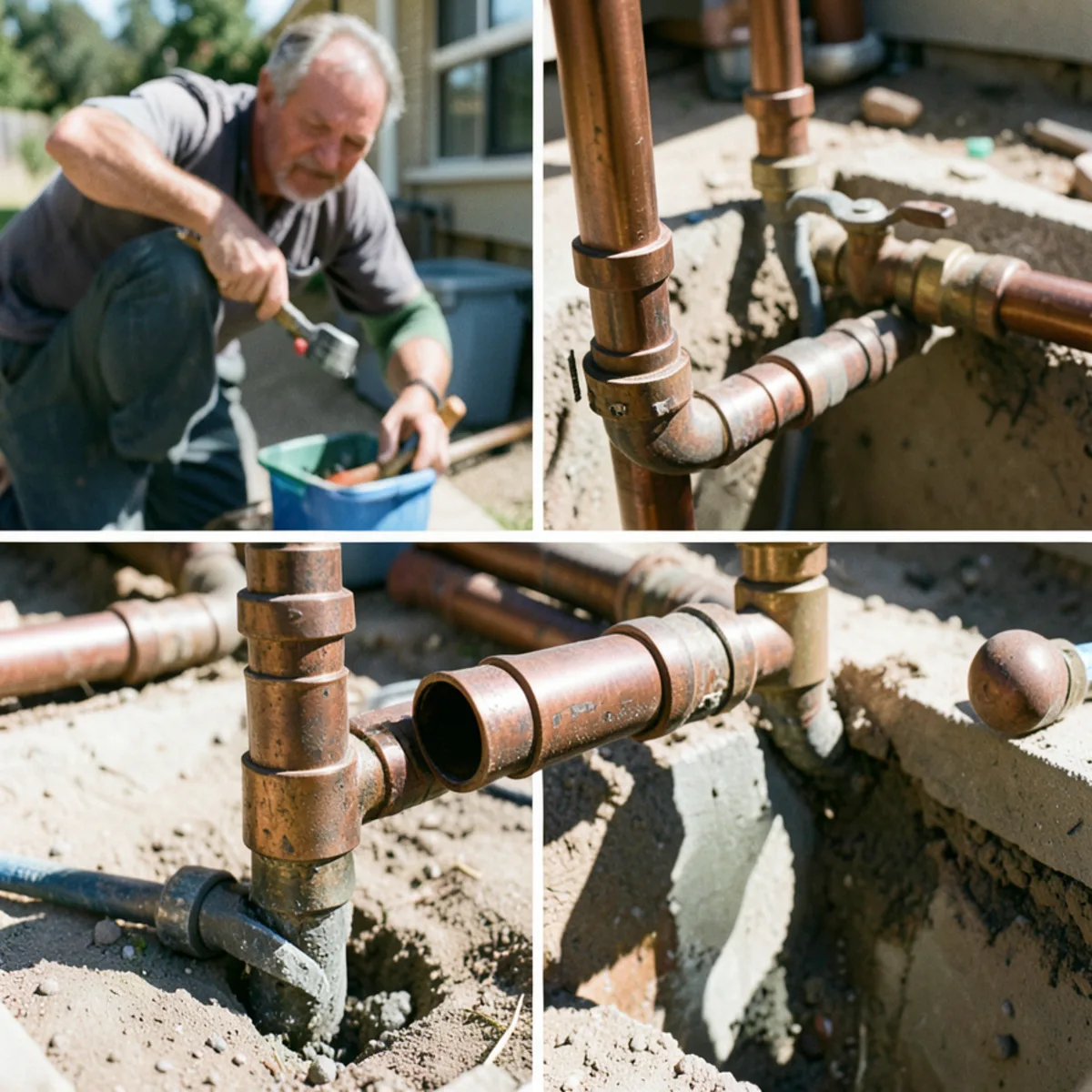
Why Slab Leaks Are Common in South Placer County Subdivisions
Homeowners frequently wonder why homes built during the 1980s, 1990s, and early 2000s experience under-slab copper pipe failures. In South Placer County, slab leaks are driven by a combination of soil geology, construction practices, and water hydraulics:
1. Expansive Clay Soil Dynamics: South Placer County soils are rich in dense alluvial clay. These soils expand dramatically when saturated by winter rainfall and shrink significantly during dry, 100°F Central Valley summers. This continuous seasonal movement exerts shifting shear pressure on buried foundation footings and under-slab plumbing.
2. Un-Sleeved Copper Embedment: During the rapid building booms of the 1980s and 1990s, plumbing codes permitted soft Type M and Type L coiled copper tubing to be embedded directly into sand or packed gravel trenches beneath foundation slabs without protective plastic polyethylene sleeves. As pipes expand and contract with hot water thermal cycling, microscopic friction against gravel aggregate wears away the outer copper wall.
3. High Municipal Water Supply Pressure: Neighborhoods along Highway 65 frequently experience street supply pressures exceeding 85 to 95 PSI. High velocity water flow creates internal turbulence and erosion-corrosion at sharp pipe bends, eroding the inner copper wall from the inside out.
Non-Invasive Diagnostic Technology: How Plumbers Pinpoint Leaks
Gone are the days when plumbers had to guess where a leak originated by tearing up entire living room floors with jackhammers. Our service technicians utilize advanced non-invasive diagnostic equipment to pinpoint leak coordinates to within a single floor tile:
1. Ultrasonic Acoustic Ground Microphones: High-gain acoustic listening sensors amplify the unique sound frequency of high-pressure water escaping into surrounding soil and concrete. Technicians scan floors systematically to detect the peak decibel reading.
2. Infrared Thermal Imaging Cameras: High-resolution FLIR infrared cameras visually display thermal heat signatures beneath flooring, revealing the exact plume of hot water radiating through concrete slabs without touching the floor.
3. Nitrogen Pressure Isolation Testing: By charging isolated plumbing manifolds with non-toxic compressed nitrogen, technicians monitor digital manometers to confirm which specific hot or cold line branch has lost pressure integrity.
Spot Repair vs. Non-Invasive Overhead Uponor PEX Reroute
Once a slab leak is located, homeowners face two repair paths: jackhammer spot repair or overhead PEX bypass rerouting:
Option A: Jackhammer Direct Spot Repair. This method involves cutting finished flooring, breaking through the structural concrete slab with electric demolition hammers, excavating damp soil, and soldering a copper sleeve onto the ruptured section. While sometimes selected when flooring is already scheduled for replacement, spot repairs are noisy, dusty, disrupt structural slab integrity, and leave the remaining aged copper under the slab vulnerable to another leak next month.
Option B: Overhead Uponor PEX-A Bypass Reroute. This is the gold-standard modern solution recommended by licensed plumbing practitioners. We completely abandon the failing under-slab copper line in place. Our technicians route a brand-new, flexible Uponor PEX-A line up through an interior wall, across the attic or ceiling joists, and down to the destination fixture. Your expensive hardwood, tile, and concrete foundation remain 100% intact, and future under-slab flood risks are permanently eliminated.
Claiming the City of Roseville $750 Leak Repair Rebate
Roseville Environmental Utilities operates one of the most generous municipal water conservation rebate programs in California to encourage prompt leak repairs:
1. The Rebate Benefit: The City of Roseville Leak Repair Rebate reimburses 50% of professional licensed plumbing repair costs up to a maximum credit of $750 applied directly to your municipal utility account.
2. Mandatory City Water Wise House Call: To qualify, you must schedule a free Water Wise House Call with the City of Roseville before or during the repair process. A municipal water efficiency specialist visits your property, verifies the active leak on the meter, and provides official rebate qualification paperwork.
3. Itemized Plumbing Invoices: Our company provides the exact itemized invoice breakdown required by the city, detailing diagnostic methods, repair scope, and proof of payment so you receive your full $750 rebate credit without delay.
Related Plumbing Services & Coverage
Services Mentioned:
Relevant Communities:
Frequently asked questions
Need professional plumbing service in Roseville?
Our Blue Oaks Blvd technicians provide upfront written estimates on every visit.